Choosing a Low-E coating by climate zone
Low-E coatings are microscopically thin metallic layers on the glass surface. They are effectively invisible, and they decide how much of the sun’s heat reaches the room and how much of your heating stays in it. Which coating is right is a question about your climate, not about your budget.
The rule underneath all of this is simple: in a cold climate you want solar heat gain, because it is free heating. In a hot climate you want to reject it, because you are paying to remove it again. The middle of the country wants some of both, which is why it has the widest choice.
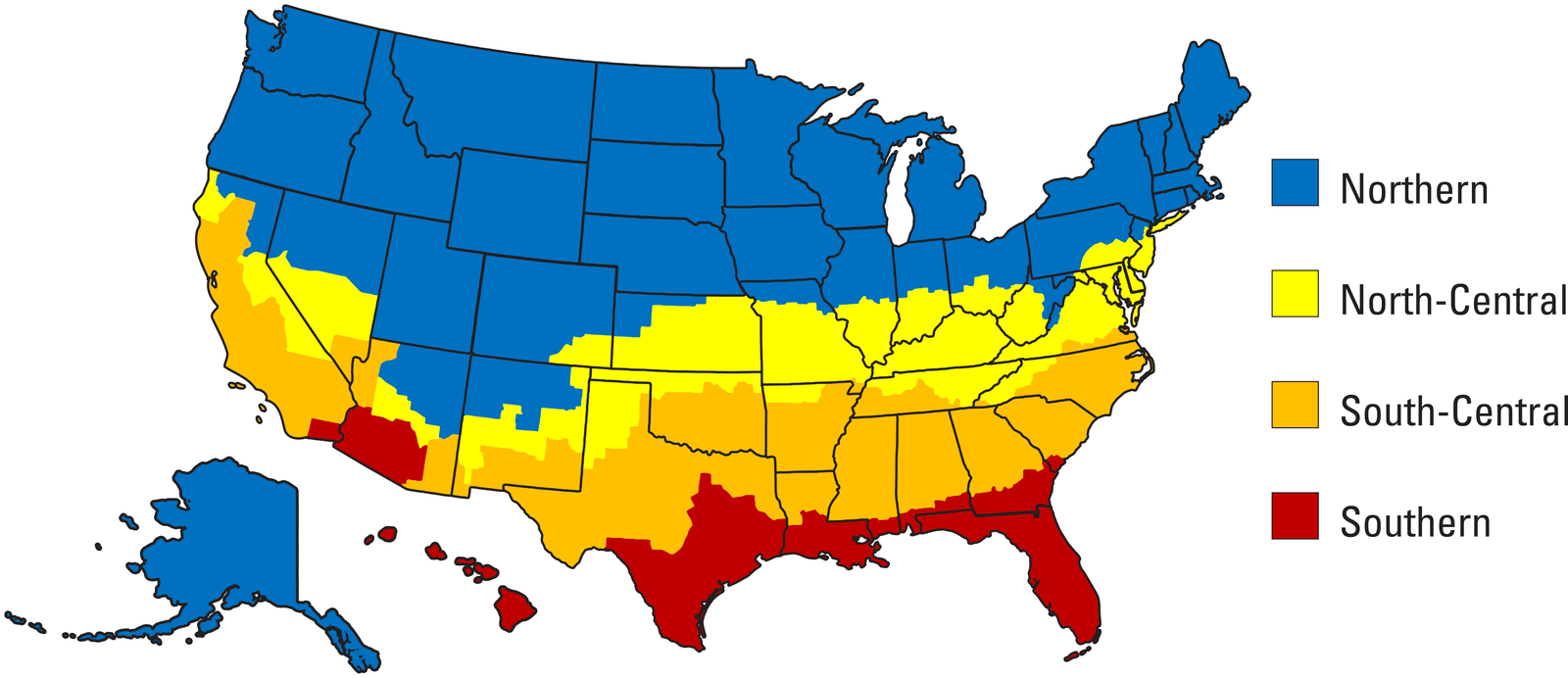
Northern
Low-E1 / Low-E2 / Low-E3All three coatings are offered here. Heating dominates, so a coating that admits solar heat while holding radiant heat inside is usually the better trade — winter sun does useful work in this band. Low-E1 is the high-gain end of that choice.
North-Central
Low-E2 / Low-E3Low-E2 and Low-E3 are offered. Both seasons matter, so orientation starts to decide it — south-facing and west-facing glass often want different coatings on the same building.
South-Central
Low-E2 / Low-E3Low-E2 and Low-E3 are offered. Cooling dominates for most of the year, so rejecting solar gain generally beats admitting it.
Southern
Low-E3Low-E3 only. Cooling dominates almost year-round, maximum solar rejection is the right answer, and the coating matters more here than anywhere else in the country.
What ENERGY STAR requires in each zone
This is the government’s threshold table, not our product data. It tells you what any window must achieve to be certified in a given zone. Compare it against the certified figures on the product pages, each of which carries its NFRC directory number so you can check the rating independently.
| Climate zone | U-Factor (Btu/h·ft²·°F) | SHGC | Basis |
|---|---|---|---|
| Northern | ≤ 0.22 | ≥ 0.17 | Prescriptive |
| = 0.23 | ≥ 0.35 | Equivalent energy performance | |
| = 0.24 | ≥ 0.35 | Equivalent energy performance | |
| = 0.25 | ≥ 0.40 | Equivalent energy performance | |
| = 0.26 | ≥ 0.40 | Equivalent energy performance | |
| North-Central | ≤ 0.25 | ≤ 0.40 | Prescriptive |
| South-Central | ≤ 0.28 | ≤ 0.23 | Prescriptive |
| Southern | ≤ 0.32 | ≤ 0.23 | Prescriptive |
Air leakage, all zones: ≤ 0.3 cfm/ft²
These are EPA thresholds. We do not print a pass or fail mark against them: ENERGY STAR certification is a formal determination made by recognised certification bodies against tested ratings under a partner agreement, and a tick drawn by us would not be that. Ask us and we will confirm in writing which models are certified for your zone.
Source: ES_Windows_Table_Oct2023.pdf, October 2023
Northern zone: the equivalent-performance route is the one that wins jobs
Northern is the only zone with two ways to qualify, and the second one is where most of the argument happens. The prescriptive route wants U-Factor at or below 0.22. But a window at U 0.25 also qualifies — provided its SHGC is 0.40 or higher. That is a completely different glazing decision: instead of chasing the lowest possible U-Factor, you let solar heat in and let it do the heating for you.
It matters commercially because a window that fails the prescriptive test can still qualify on the equivalent-performance path, and a supplier who does not know that will tell you the job cannot be done. Send us the zone and the elevations and we will tell you which route your openings should take.
What each coating does
The choice where you want the most solar heat gain and the most radiant heat retention. Generally specified in northern climates, where free winter heat is worth more than summer rejection.
The most common coating, because it works across a wide range of geography. A balanced position rather than a compromise — it is the default for a reason.
For maximum solar rejection. Multiple metallic layers cut heat gain hardest while keeping visible light reasonable, so it is specified in southern and sunny climates.
Two panes with Low-E coatings, insulated with argon. The standard build-up, and the right answer for most openings in most climates.
Three panes with Low-E coatings, two argon-filled cavities. Available where glazing thickness can exceed 3/4 inch — worth it for cold climates, quiet requirements, and very large fixed lites.
Tell us the zone and we will specify it
Send the project address and the elevations. We will tell you which coating belongs on which face of the building, and give you the certified U-factor and SHGC for that build-up with its NFRC directory number so you can verify the figures yourself.
Request a glazing recommendation →Zone boundaries are the EPA’s. Code compliance is decided by your jurisdiction’s adopted energy code, not by this page — we confirm the required values in writing for your address at quotation.
See this in a real project
- Multifamily building, Frisco — Frisco, Texas
- Hospitality project, Irving — Irving, Texas
- Slim window wall, Sacramento — Sacramento, California